Electrical Signal Testing
Optical Transmission Performance Testing
Automated Optical Communication Test Equipment
Fiber End-Face Physical Characteristics Testing
Fiber End-Face Cleaning
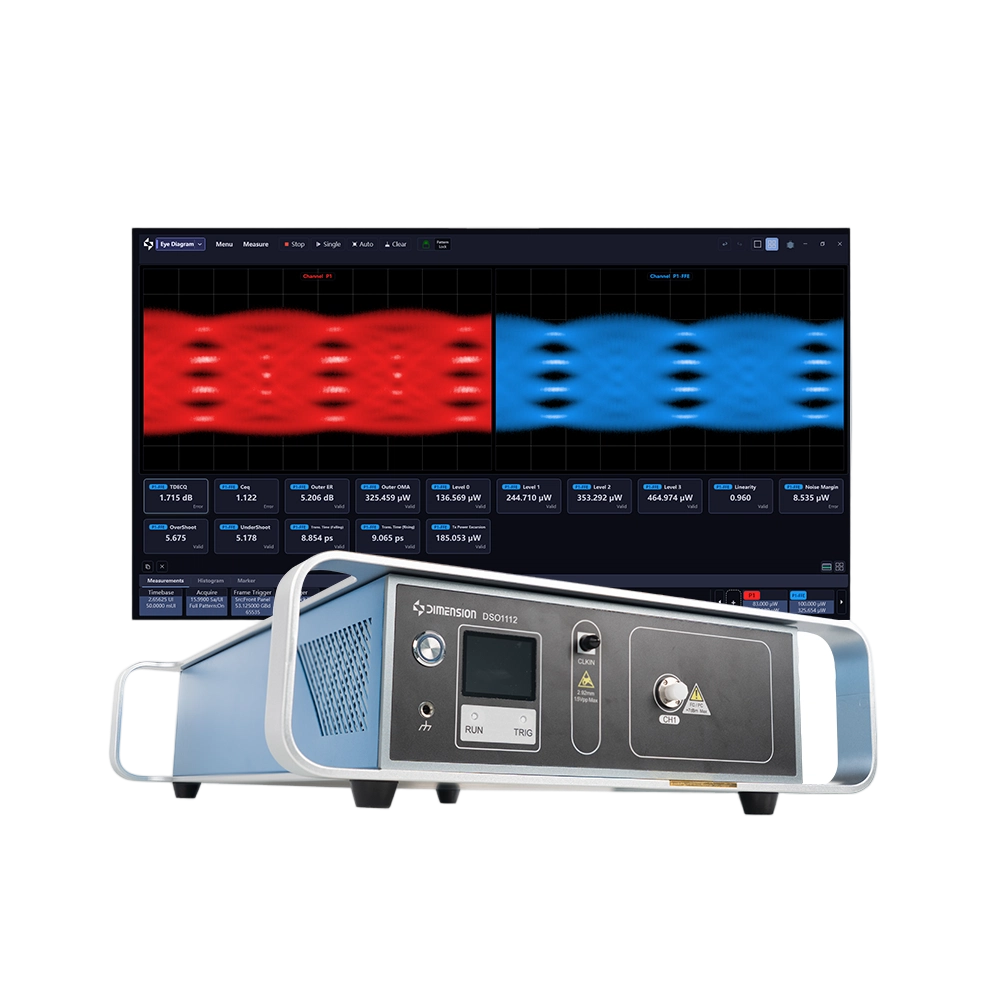
 Trace signals to their source and precisely analyze electrical signal transmission characteristics. SignalLab, a sub-brand of Dimension Technology, specializes in electrical signal quality and transmission performance testing and analysis. Its product portfolio includes bit error rate testers (BERTs), clock recovery instruments, and other test equipment.
Recommended
65 GHz Optical Sampling Oscilloscope
NEW2026.11
 Reveal the true parameters of optical performance. ReveLuX, a sub-brand of Dimension Technology, specializes in optical performance measurement and analysis. Its product portfolio includes insertion loss and return loss testers, optical time-domain reflectometers (OTDRs), optical power meters, and other test instruments.
Recommended
FA MAX 3 Polarity and IRL Meter
NEW2026.10
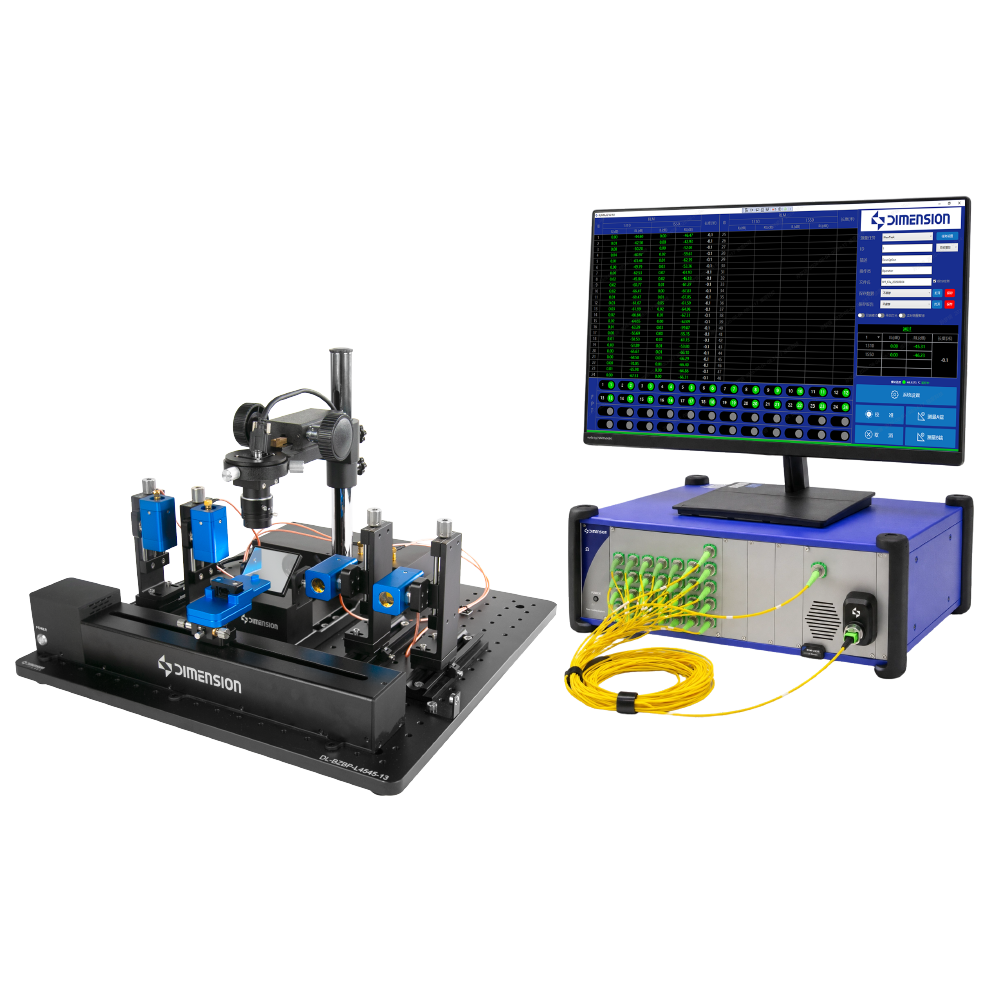
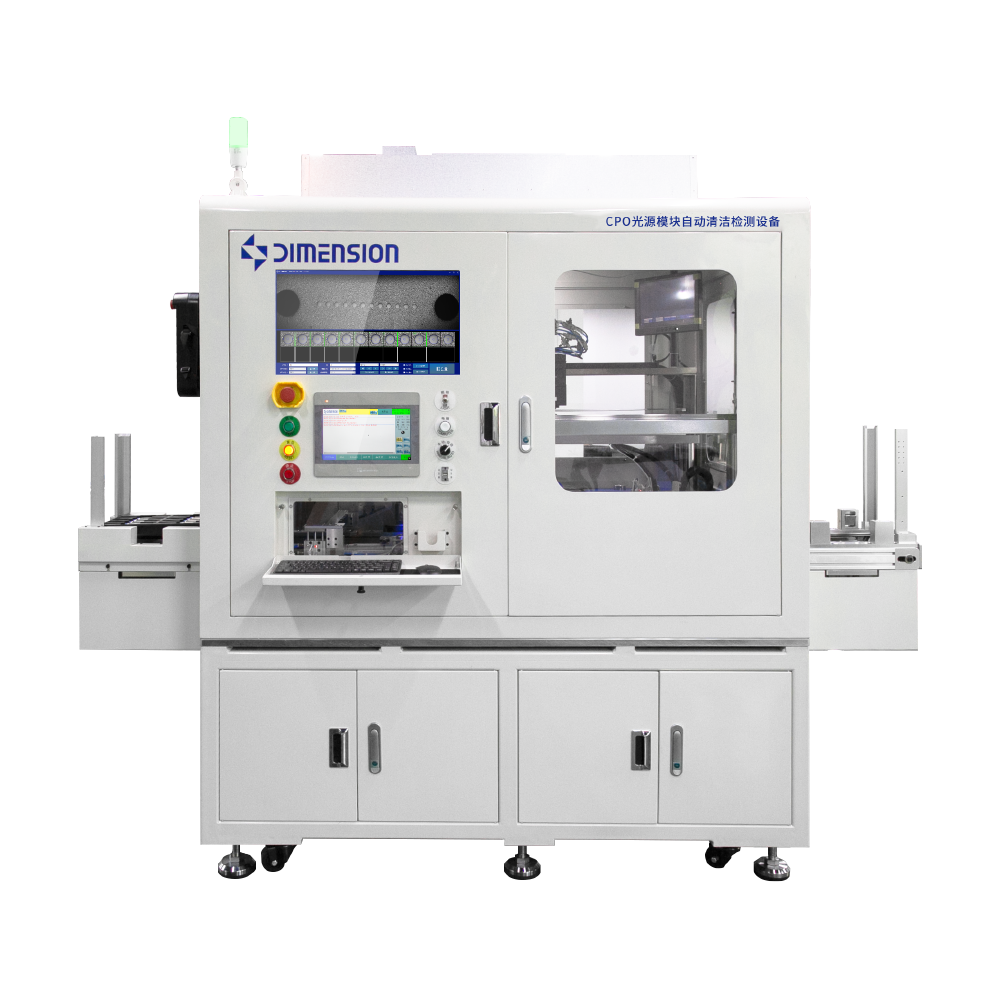
 Specializing in automated testing, inspection, and screening, VeriAuto is Dimension Technology's sub-brand dedicated to intelligent automated test equipment. Its product portfolio includes automated fiber end-face inspection, cleaning, and optical coupling equipment.
Automated Fiber End-Face Cleaning and Inspection Systems
Automated Cleaning and Inspection Equipment for CPO Optical Source Modules(New)
Automated Cleaning and Inspection Equipment for NPO/XPO Optical Modules(New)
Automated Cleaning and Inspection Equipment for 1.6T MPO Optical Transceivers(New)
Fully Automated Cleaning and Inspection System for 1.6T/800G Optical Transceivers
800G LC Intelligent End-Face Cleaning and Inspection System
Automated Optical Coupling Systems
Fully Automated High-Precision Microlens Array Coupling for CPO and High-Speed Optical Transceivers(New)
High-speed optical module and all-in-one automatic high-precision coupling equipment for silicon photonics FA
Fully Automated High-Precision Lens Module Coupling Equipment for High-Speed Optical Transceivers
 Precisely revealing the physical characteristics of fiber end faces. EndFace is Dimension Technology's sub-brand specializing in the inspection and analysis of fiber end-face physical characteristics. Its product portfolio includes fiber end-face inspection instruments, interferometers, and fiber core pitch measurement instruments.
Intelligent Fiber End-Face Inspection Systems
SmartCheck FV Full-Field Fiber End-Face Inspector(New)
Fast Check MT Fully Fiber Endface Inspector
SmartCheck Intelligent Fiber Endface Inspector
FastCheck Pro Fully Automatic Fiber Endface Inspector
EasyCheck V2 Integrated Fiber Endface Inspector
EasyCheck V3 Integrated Fiber Endface Inspector
EasyCheck Dual Magnification Fiber Endface Inspector
FA-1 Fiber Array End-Face Inspector
Recommended
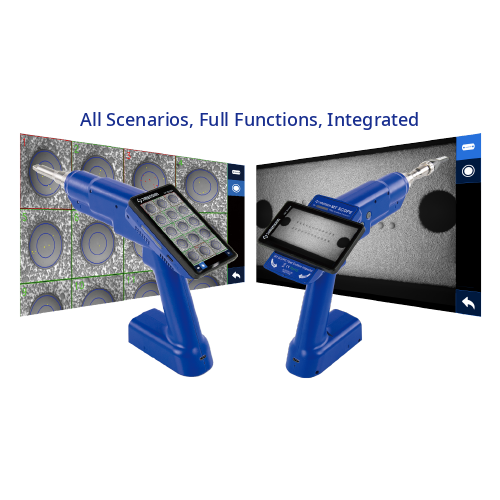
MT SCOPE Fiber Endface Inspector
NEW2026.9
 Fast and effective cleaning of microscopic optical end faces. OffSoon is Dimension Technology's sub-brand specializing in cleaning fiber end faces and precision micro-optical components. Its product portfolio includes single-fiber and multi-fiber end-face cleaning machines, cleaning pens, and other cleaning products.
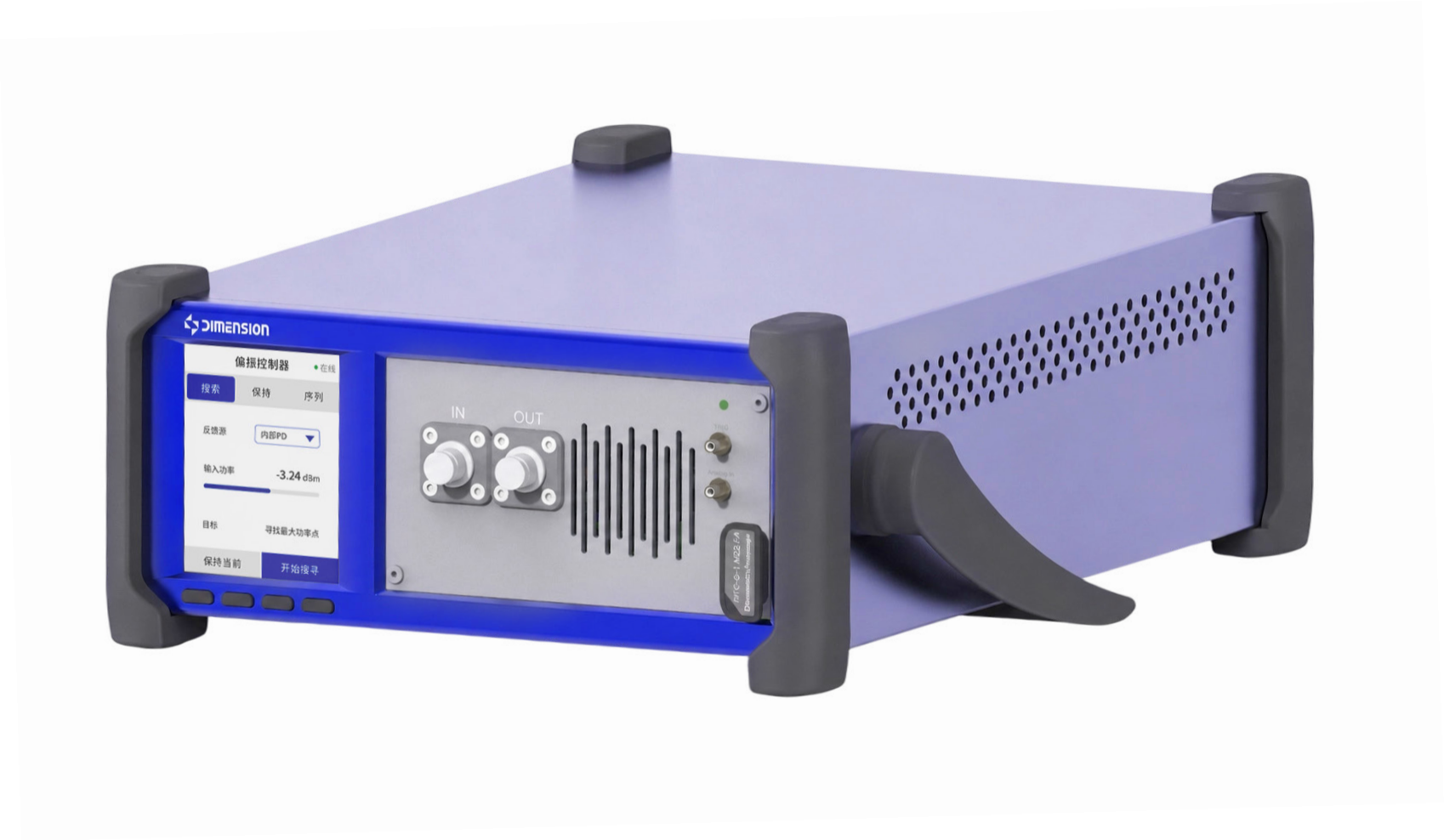
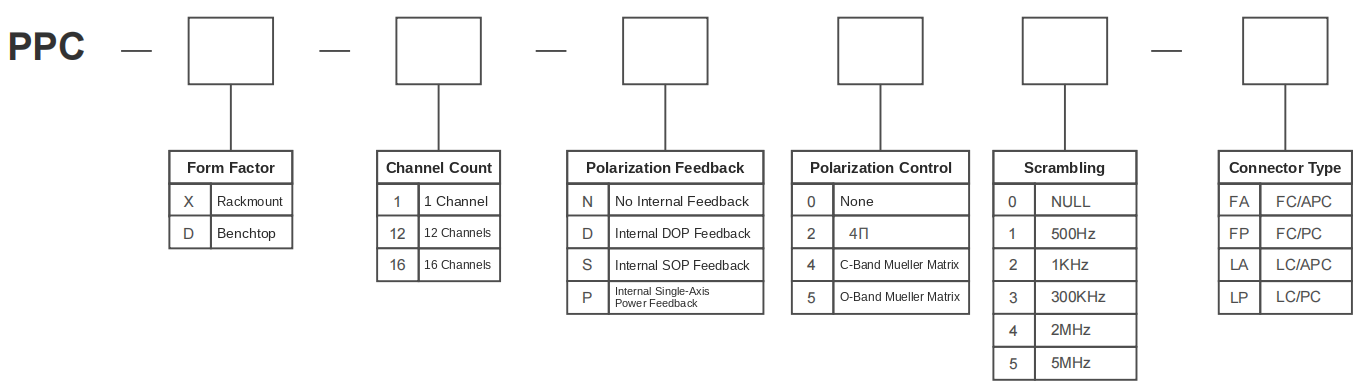
PPC Programmable Polarization Controller
Supports Target State of Polarization Control, Feedback-Based Search, Polarization Stabilization, Sequence Output, and Polarization Scrambling
Optional polarization scrambling rate of up to 5 MHz
Polarization control rate of up to 20 kHz
Supports external analog signal input and real-time monitoring
Supports user-defined target state of polarization (SOP) stabilization and dynamic tracking
Optional Mueller matrix measurement with four-state or six-state configurations
Product Details
Product Overview
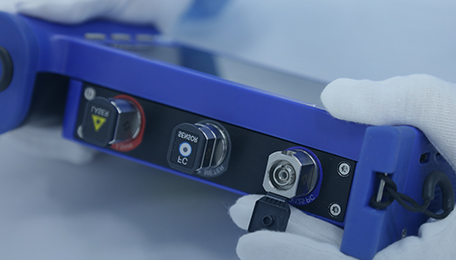
The PPC Programmable Polarization Controller supports target state of polarization (SOP) control, feedback-based search, polarization holding, sequential state output, and polarization scrambling.
Its intuitive touchscreen interface displays operating modes, feedback power, and control status in real time. The instrument is suitable for R&D testing and debugging and can also be integrated into automated test systems via SCPI commands.
Key Features
Optional polarization scrambling rate of up to 5 MHz
Polarization control rate of up to 20 kHz
Supports external analog signal input and real-time monitoring
Supports user-defined target state of polarization holding and dynamic tracking
Optional Mueller matrix measurement with four-state or six-state configurations
Key Applications
Polarization sensitivity and polarization-dependent loss (PDL) testing of optical components
Polarization tracking and stress testing of coherent optical transceivers
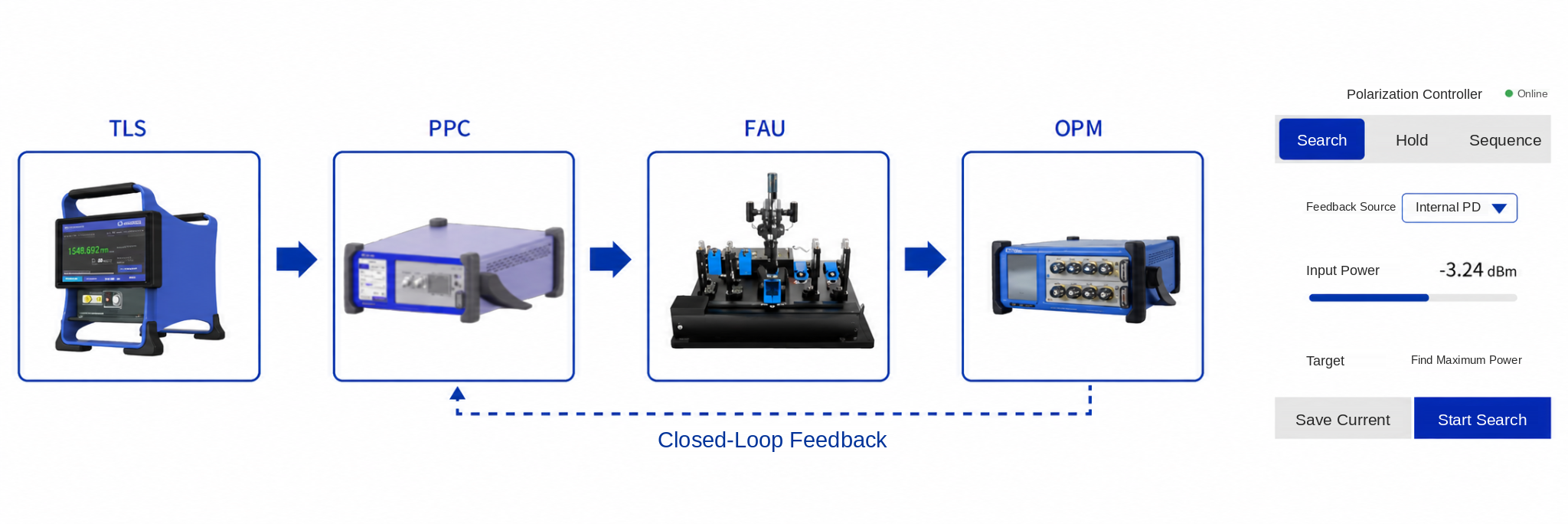
Coupling optimization for silicon photonics chips, modulators, and fiber array units (FAUs)
Target SOP search, stabilization, and dynamic compensation
Mueller matrix measurements and automated production testing
Search & Hold: From Optimal SOP Search to Stable Polarization Control
The PPC searches for the maximum or minimum optical power based on feedback from an internal photodetector (PD) or an external power signal.
Once the optimal state is identified, the instrument saves the target SOP and continuously maintains the operating point through feedback control.
High-Speed Polarization Scrambling Up to 5 MHz
The PPC can be equipped with an optional high-speed polarization scrambling module based on electro-optic crystals, supporting scrambling rates of up to 5 MHz.
The instrument rapidly changes the state of polarization of the output light to simulate dynamic polarization variations in high-speed optical communication links.
This capability provides controllable and repeatable polarization stress conditions for coherent receivers and polarization tracking algorithms.

Applications:
400G/800G/1.6T coherent optical transceivers
DSP polarization demultiplexing verification
Loss-of-lock and recovery time testing
High-speed bit error rate testing
Polarization Control Rate Up to 20 kHz
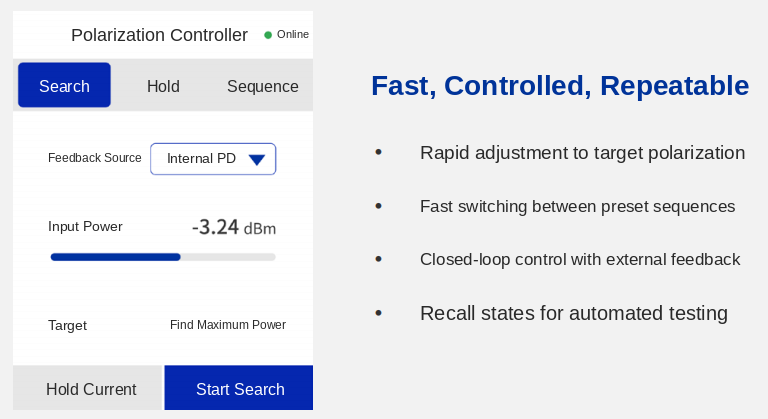
The PPC supports polarization control rates of up to 20 kHz, enabling rapid target SOP adjustments, polarization sequence switching, and feedback control.
Compared with conventional low-speed polarization controllers, the PPC can complete SOP searches and adjustments in less time, improving efficiency in R&D testing and automated production.
External Analog Signal Input and Real-Time Monitoring
The PPC supports external analog signal inputs and can be connected to optical power meters, photodetectors, or other sensors.
Output variations from the device under test can be used as feedback signals for polarization control.
The instrument continuously monitors the feedback signal and automatically adjusts the polarization state according to the selected control objective.
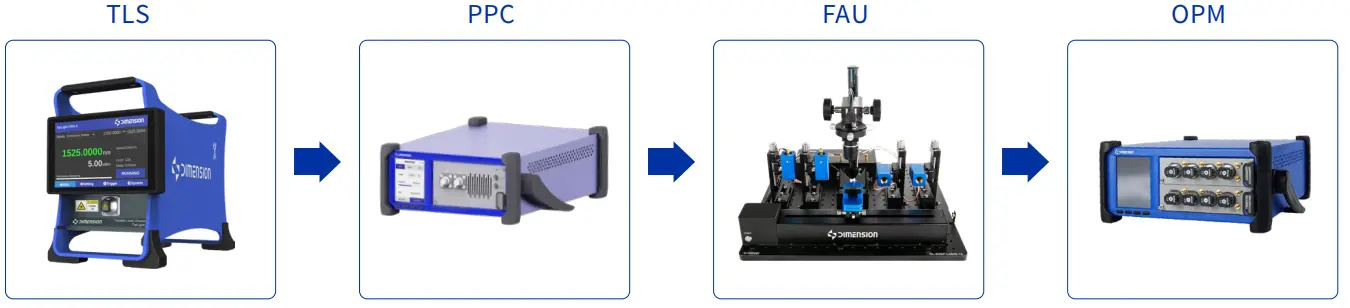
Control Objectives:
Find maximum value
Find minimum value
Maintain target analog signal level
Monitor feedback variations
User-Defined Polarization Stabilization and Dynamic Tracking
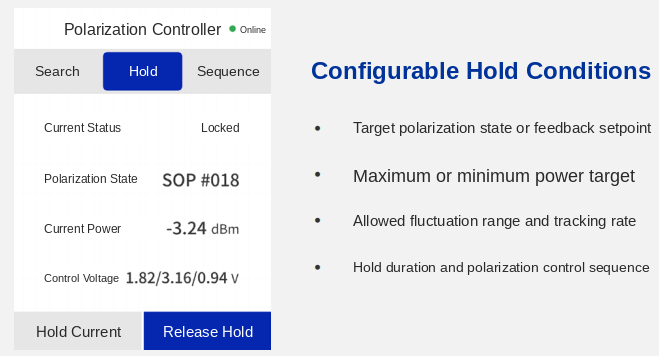
Users can define a target state of polarization or a desired feedback operating point according to their testing requirements.
After completing the search, the PPC saves the current control parameters and continuously monitors external feedback.
When fiber disturbances, temperature changes, or mechanical vibrations cause system drift, the instrument dynamically adjusts the output polarization to restore the specified operating point.
Typical Applications:
Maintaining optimal coupling conditions in silicon photonics
TE/TM operating state stabilization
Modulator polarization stabilization
Polarization compensation during temperature sweeps
Long-term reliability testing
Optional Mueller Matrix Measurement
The PPC can be equipped with Dimension Technology's independently developed Mueller matrix polarization state generation module.
The module sequentially generates four or six standard polarization states.
When combined with a tunable light source and a high-speed optical power meter, the system measures the power response of the device under test at different wavelengths and input polarization states, enabling calculation of polarization-dependent loss (PDL) and the Mueller matrix.
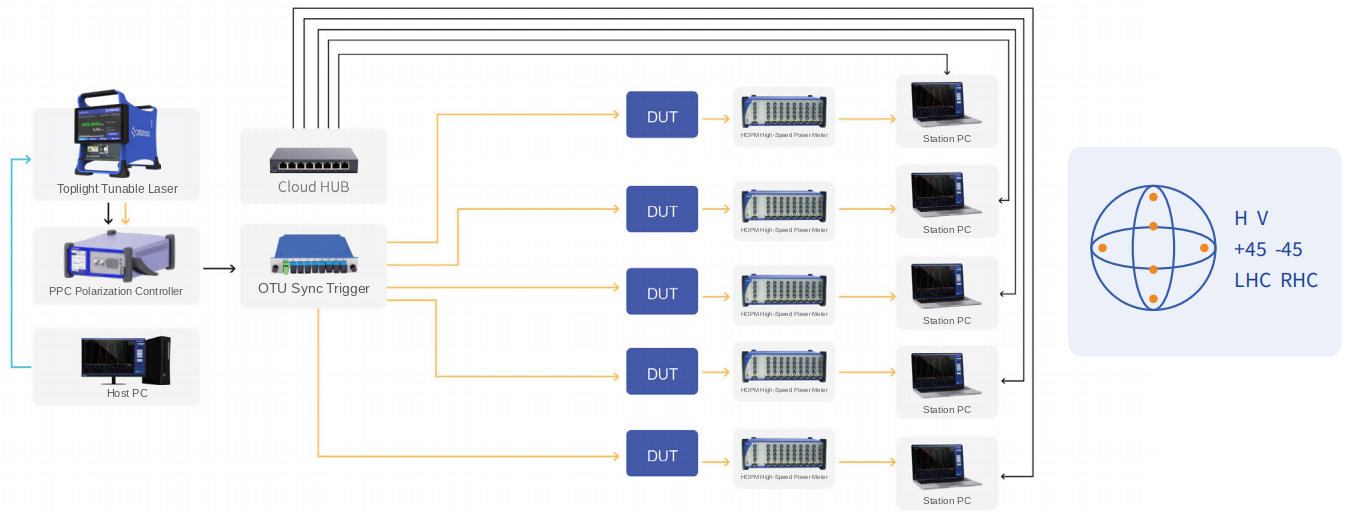
Four-State and Six-State Measurement Options
Four-State Measurement:
Provides faster measurements and a simpler workflow, making it suitable for production testing, wide-wavelength scanning, and multi-channel automated measurements.
Six-State Measurement:
Provides more symmetrical polarization state coverage and greater data redundancy, making it suitable for R&D validation and high-precision PDL and Mueller matrix measurements.
Main Application Scenarios
Application | Recommended Configuration |
|---|---|
Polarization Sensitivity / PDL Testing | PPC Scrambler |
Coherent Polarization Stress Testing | PPC High-Speed |
Silicon Photonics / FAU Coupling | PPC Controller |
Polarization Stabilization and Tracking | PPC Controller |
Mueller Matrix / WST Testing | PPC Mueller |
Quick Selection Guide