
Fiber Optic Connectors & Assemblies
Fiber Array Unit (FAU) Testing Solutions (New)(New)
Polarization-Maintaining Fiber Connectivity Components (New)(New)
Fiber Array (FA) Spot Alignment and Coupling Inspection System
SN-MT Connector Inspection Solutions for Manufacturing
MMC Connector Cleaning and Inspection Solutions for Manufacturing
MPO Connector Inspection Solutions
Automated Cleaning and Inspection for High-Speed Optical Transceivers
1.6T/800G Single-core Optical Module Intelligent Cleaning and Inspection Solution
1.6T/800G LC Optical Module Testing Scheme
Optical Port Cleaning and Inspection for Active Optical Devices
High-Speed Coherent Optical Transceiver Testing
Active Optical Cable (AOC) Testing Solutions
Linear Pluggable Optics (LPO) Testing
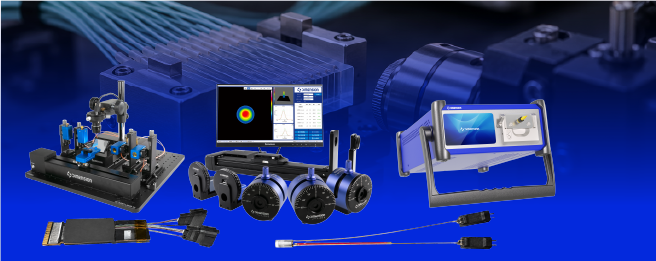
Optical Filter Testing Solutions
A light filter is an inorganic optical device that selectively transmits light signals of specific wavelengths while suppressing those of other wavelengths.
Solution Overview
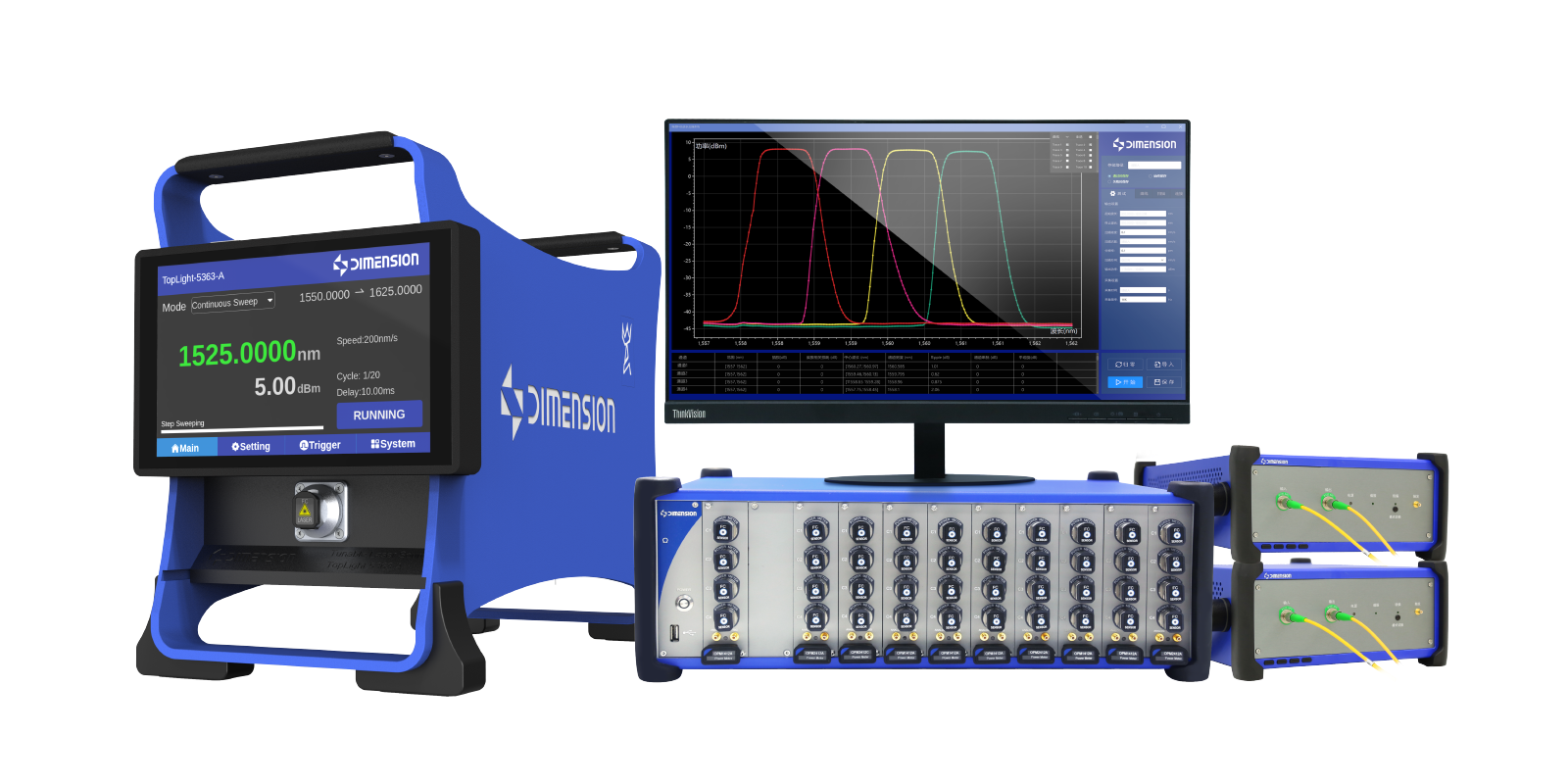
This solution conducts a systematic test on the optical performance of the optical filter. It uses a tunable continuous light source combined with a spectrum analyzer as the core testing instrument. The optical path is set up according to the standard, and the input optical power, polarization state, and environmental temperature are controlled. The transmission response curve of the device is obtained through wavelength scanning, and parameters such as the central wavelength, passband bandwidth, insertion loss, out-of-band suppression ratio, passband flatness, PDL, PMD, and return loss are tested. The product's performance indicators are compared to determine if they meet the standards. Simultaneously, a temperature cycling test is carried out to evaluate the wavelength drift and stability of the filter under different operating conditions. Complete test data and spectral graph records are output.

Core test parameters
1. Central wavelength: The wavelength corresponding to the transmission peak, which is the reference wavelength of the channel.
2. 3dB bandwidth: The wavelength range where the transmission power drops by 3dB, representing the bandwidth of the passband.
3. Insertion loss IL: The power attenuation of the optical signal passing through the device within the passband.
4. Isolation ISO: The attenuation of the blocking band relative to the peak of the passband, reflecting the ability to suppress noise.
5. Passband ripple RIPPLE: The fluctuation of the transmission response within the passband, indicating the flatness of the passband.
6. Polarization-dependent loss PDL: The maximum deviation of insertion loss caused by the change in polarization state.
Output power and power stability test
Measures the output optical power of the tested component and observes the change of power over time through continuous collection, which is used to evaluate the output level and stability. The OPM optical power meter provides various module and channel configurations, and can be combined with the test platform to build a single-channel or multi-channel power measurement system.
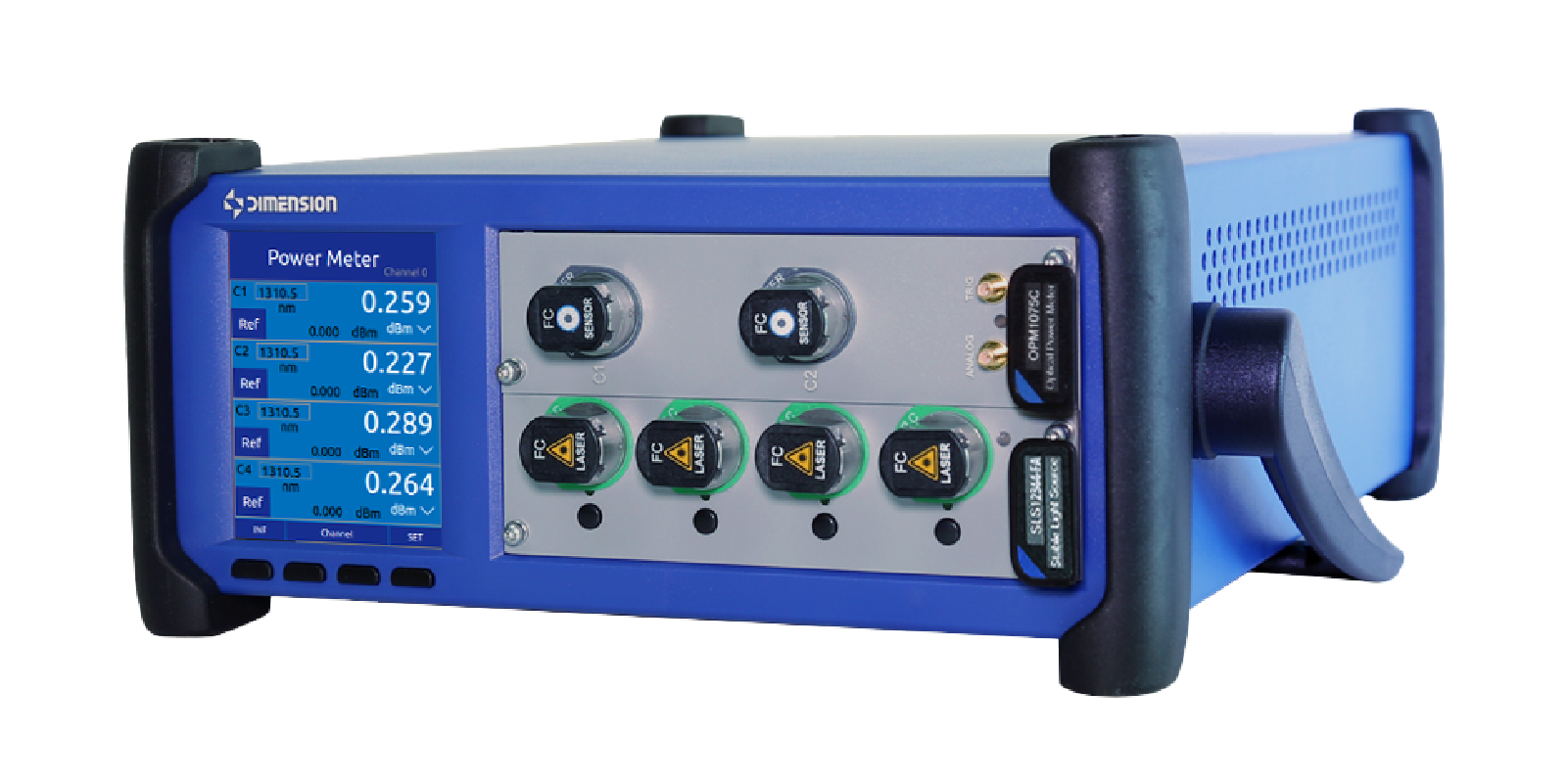
Multi-channel optical power meter
Spectral performance test
Calibration of adjustable light source and power meter for spectral testing
Measure the central wavelength, spectral width and edge mode suppression ratio to evaluate the spectral characteristics of the laser output. Select a spectral analyzer according to the wavelength range, spectral width and edge mode suppression ratio requirements of the measured object, and correlate the spectral results with the polarization and power test results to form a complete performance record.
Multi-channel optical path switching
By using the optical switch to connect different measurement channels or testing instruments, the need for repeated plugging and unplugging is reduced, making it easier to construct a multi-channel testing process. OSW can be configured according to the number of channels and interface forms; for applications requiring light input monitoring, a testing system can be built in combination with a power monitoring scheme. The PER measurement link needs to be verified separately to avoid the impact on the results due to the change of polarization state when switching the link.
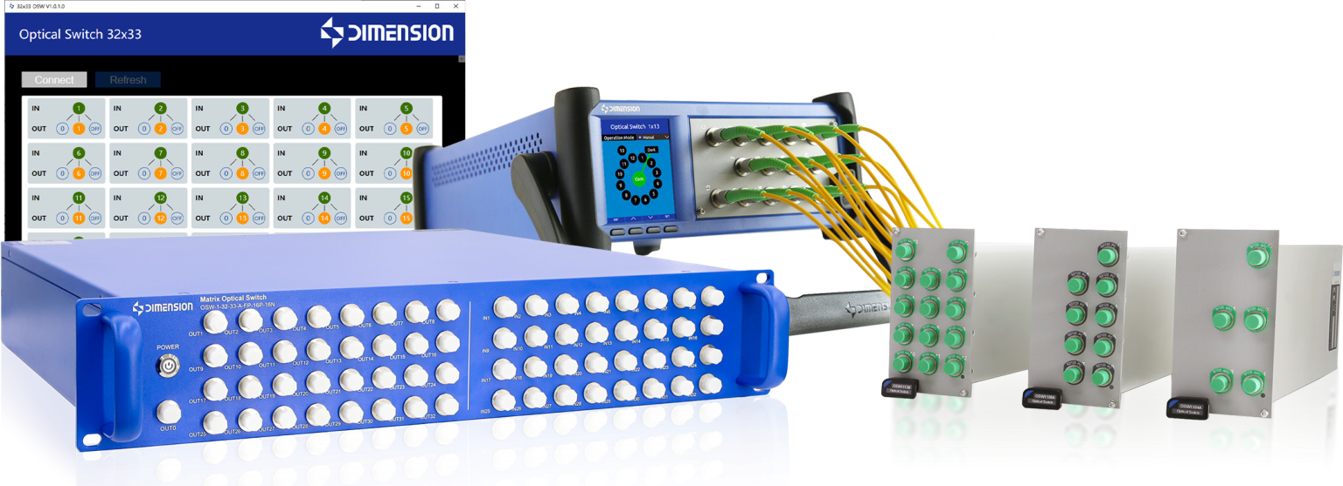
OSW optical switch
Optical fiber end face defect detection
FastCheck Pro fully automatic optical fiber end face detector
EasyGet WiFi handheld end face detector
MT SCOPE handheld end face detector
Check for contamination, scratches and other defects on the connection end face, reducing interference to power and polarization measurements caused by the connection status. FastCheck Pro supports automatic centering, focusing, exposure and measurement, suitable for bench-top detection and integration with automation; EasyGet WiFi supports wireless transmission, automatic analysis and report output; MT SCOPE comes with a touch screen and can independently complete on-site detection and determination. Specific interfaces require corresponding adapters.
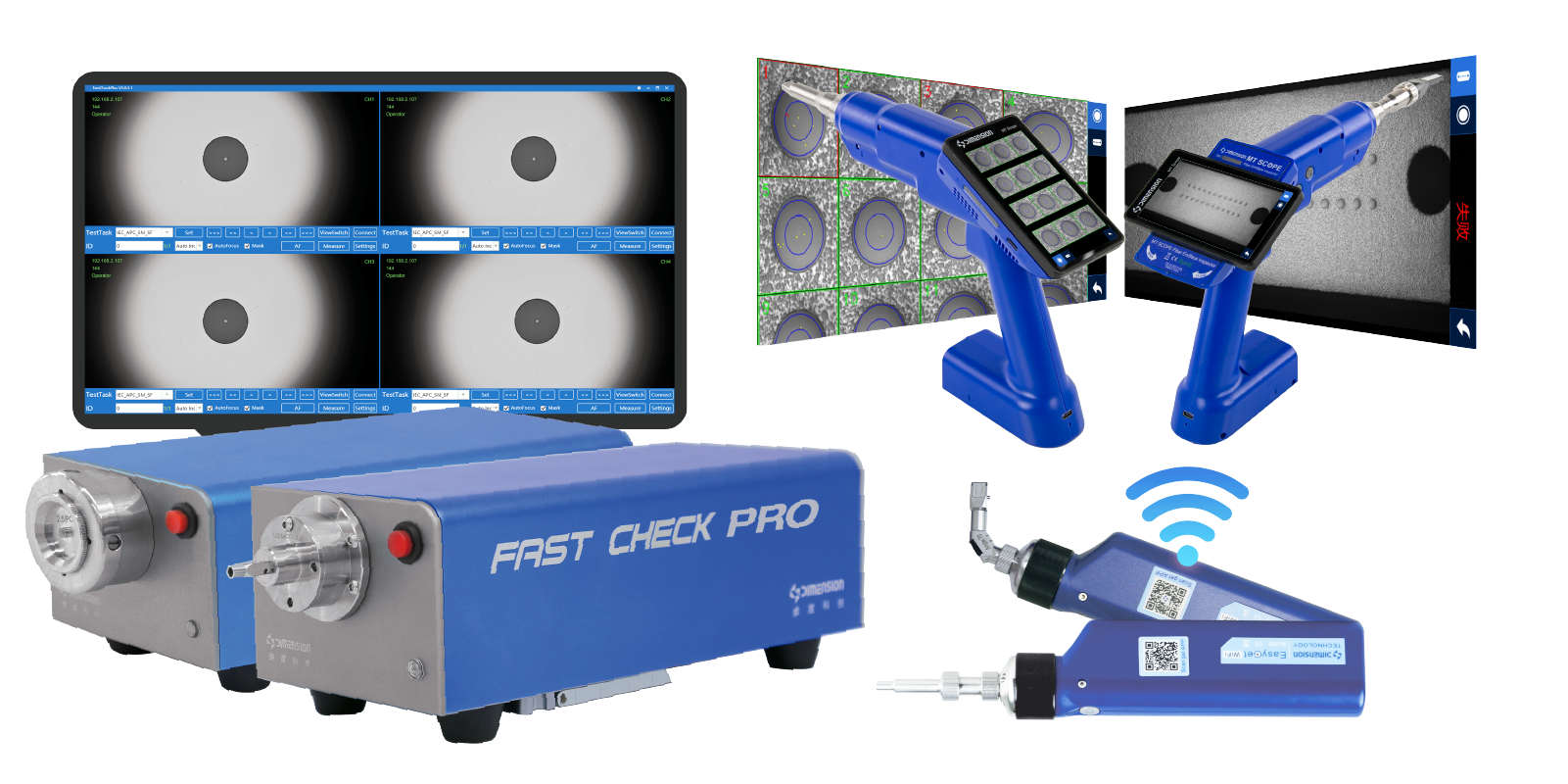
End face detector
End face cleaning
Offsoon Pro Optical Fiber End Face Cleaning Equipment
This equipment adopts a non-contact cleaning method using cleaning solution and dust-free gas to remove oil stains and adhered contaminants on the connection end faces. It is recommended to confirm the end face condition following the "inspection - cleaning - re-inspection" process. Re-inspection must be successful before connecting to the performance test link; the cleaning head and process are configured according to the interface structure.
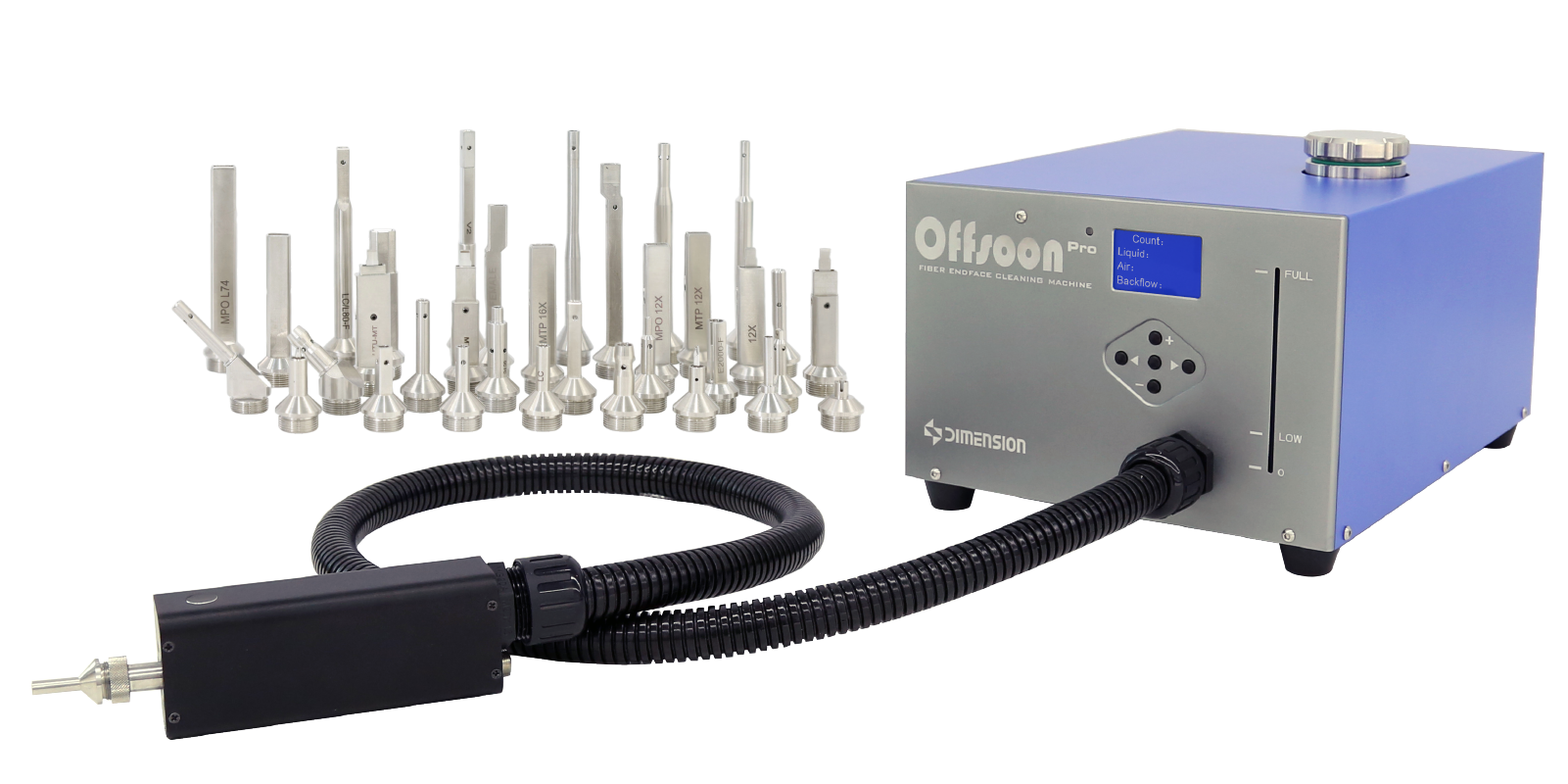
Offsoon Pro Optical Fiber End Face Cleaning Equipment
Advantages of the plan
1.The dynamic range is high and the out-of-band suppression test accuracy is good.
By using the TLS scanning scheme, it has a larger dynamic range compared to the ASE + OSA scheme, and can accurately measure the high out-of-band suppression index of the filter, avoiding the overestimation of test results due to noise floor limitations.
2. The wavelength tuning accuracy is high, and the spectral sampling is fine.
The TLS wavelength step can be controlled and has high accuracy. It can set a fine wavelength step according to the requirements, and the results of passband ripple, 3dB bandwidth, and center wavelength positioning are more in line with the characteristics of the real device.
3. It supports controllable polarization state testing, and the PDL test is reliable.
By combining with the polarization controller to traverse all polarization states, the standardized PDL testing process is adopted, eliminating the data fluctuations caused by polarization randomness, and the test repeatability is strong.
4. It is suitable for high and low temperature conditions, and is convenient for stability verification.
The entire optical path can be used in conjunction with the temperature box. Scanning the spectrum under different temperatures to evaluate the wavelength temperature drift and the performance of insertion loss changing with temperature of the filter.
5. It is suitable for batch delivery testing, and the results are consistent.
The scanning process can be automated, the test conditions are unified, and there is less human intervention, which is convenient for production line / delivery acceptance, and the data can be retained in the spectrogram for easy traceability and comparison.
6. The indicators cover a comprehensive range.
A single link can complete the core parameter tests such as center wavelength, insertion loss, bandwidth, passband ripple, out-of-band suppression, and PDL, without frequently changing the test setup.
Easily access services and support from Dimension
Want help or have questions?