
Fiber Optic Connectors & Assemblies
Fiber Array Unit (FAU) Testing Solutions (New)(New)
Polarization-Maintaining Fiber Connectivity Components (New)(New)
Fiber Array (FA) Spot Alignment and Coupling Inspection System
SN-MT Connector Inspection Solutions for Manufacturing
MMC Connector Cleaning and Inspection Solutions for Manufacturing
MPO Connector Inspection Solutions
Automated Cleaning and Inspection for High-Speed Optical Transceivers
1.6T/800G Single-core Optical Module Intelligent Cleaning and Inspection Solution
1.6T/800G LC Optical Module Testing Scheme
Optical Port Cleaning and Inspection for Active Optical Devices
High-Speed Coherent Optical Transceiver Testing
Active Optical Cable (AOC) Testing Solutions
Linear Pluggable Optics (LPO) Testing
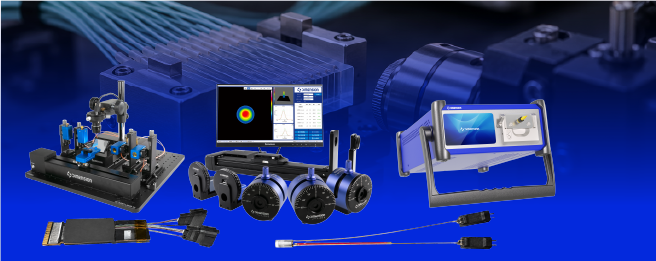
Optical Port Inspection and Cleaning for CPO and OCS Switches (New)
With the development of technologies such as CPO and OCS, optical ports are evolving towards higher density and higher integration. This requires higher standards for connector end face quality, fiber core alignment accuracy, and production inspection efficiency. Dimension Technology, catering to high-density optical interconnection applications, offers end face inspection, non-contact cleaning, geometric measurement, and automated integration solutions, helping customers enhance product quality and the stability of the production process.
01 Background of the Plan
CPO integrates optical components, OCS optical path switching, and high-density multi-core connection technologies, which are constantly evolving. The integration degree of fiber arrays, multi-core connectors, and optical engine interfaces continues to increase. Surface contamination, minor defects, and geometric deviations may all increase the difficulty of connection quality control. In research and development verification and large-scale production, traditional manual detection and cleaning methods face challenges such as efficiency, consistency of judgment, and quality traceability. Establishing an automated and standardized end-face detection and cleaning process, and configuring corresponding testing equipment for key geometrical and optical performance is an important step to ensure the quality of high-density optical interconnection products.
02 Introduction of the Project
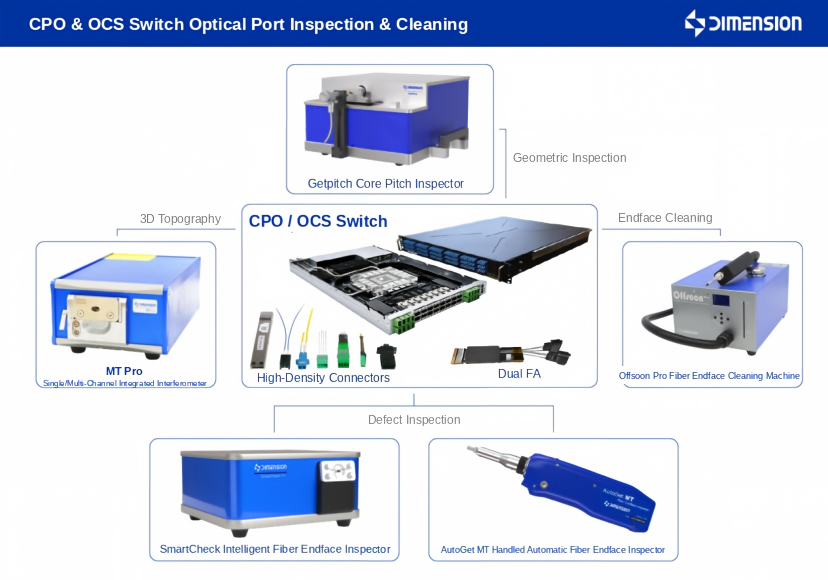
Dimension Technology offers you detection and cleaning solutions for CPO/OCS switches and high-density optical interconnection components. The solution is centered on full-field end-face detection, non-contact end-face cleaning, and automated quality assessment. It combines fiber array geometric detection, interface adaptation, and data management capabilities to build a quality control process from initial end-face inspection, cleaning processing to re-inspection determination. Based on the customer's product structure, detection requirements, and chain cycle time, you can flexibly combine detection equipment, cleaning equipment, customized fixtures, and software systems, supporting R&D verification, full production inspection, and integration with automated production lines.
Geometric detection
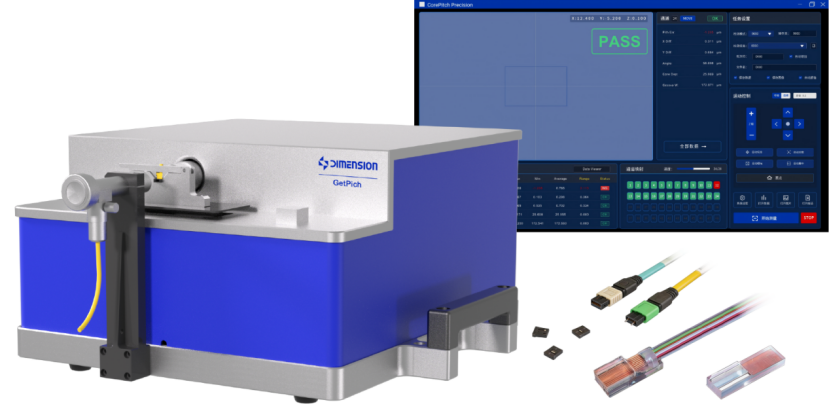
GET Pitch Intelligent Fiber Pitch Measurement System
The planar geometric detection for the visible end faces such as FA, MT and V slots can measure the position of the core, the distance between cores, and related two-dimensional geometric deviations, providing a basis for the manufacturing and assembly quality of high-density fiber arrays.
Defect detection
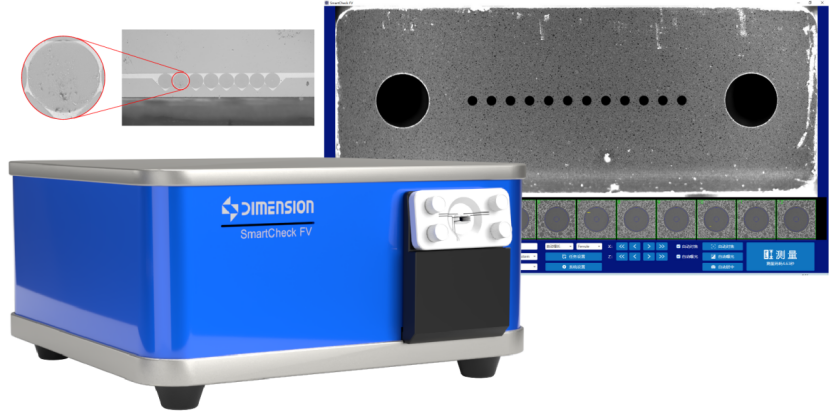
SmartCheck FV Full-Field Fiber End-Face Inspector
For the detection of end faces of CPO high-density multi-core connectors and FA components, a dual-mode imaging with different field sizes is adopted to achieve comprehensive inspection of the entire end face of the entire core and identification of local defects of individual fiber cores.
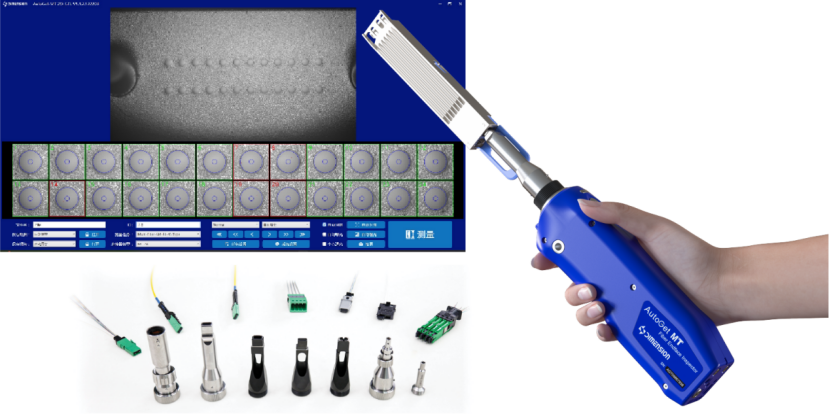
AutoGet MT Handheld automatic end face detector
For the end-face detection in the integrated state of optical switches, it supports various interface accessories and is applicable to end-face detection in multi-joint integration of devices such as MMC and SN-MT. Through wide-field imaging, automatic focusing and intelligent defect analysis, it provides support for the quality inspection of high-density optical interconnection products.
End face cleaning
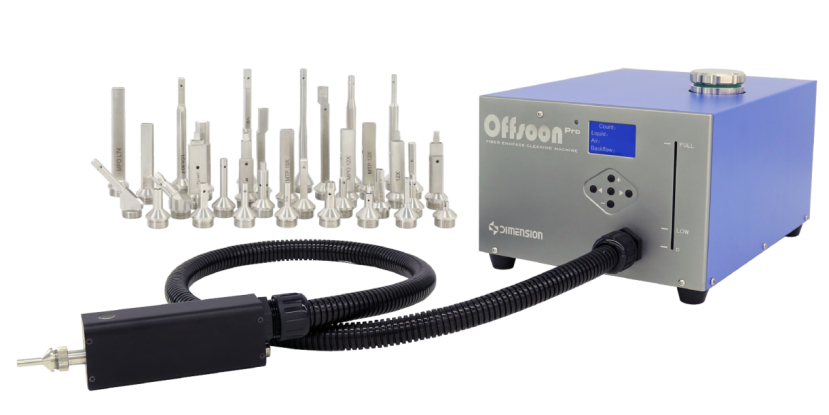
Offsoon Pro Fiber optic end face cleaning machine
It adopts a non-contact cleaning method combining liquid and gas, which is suitable for cleaning the end faces of optical density fiber connectors, optical components, and FA, etc. Through interface adaptation, it can meet the cleaning requirements of the entire chain of jumpers, semi-finished products, and finished products.
Three-dimensional shape measurement
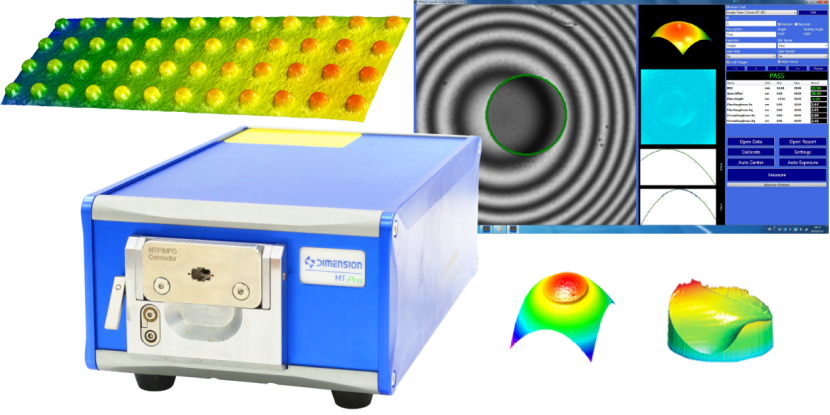
MT Pro Single-core and multi-core integrated interferometer
Carry out three-dimensional topography measurement for high-density optical components for CPO, detecting parameters such as curvature radius, end face angle, fiber height and core depression, etc., to assist in analyzing the grinding quality, assembly status and end face geometric consistency.
03 Industry Challenges
During the research and manufacturing process of CPO/OCS high-density optical interconnection devices, the following main challenges are encountered:
High end-face quality requirements: High-density and high-power optical ports demand higher standards for shape, physical dimensions, and contamination detection.
Complex product structure: Different connectors, fiber arrays, and optical engine interfaces require matching corresponding fixtures and detection methods.
Strict test conditions: The different modules, semi-finished products, and finished products within CPO and OCS optical switches have varying and strict spatial limitations and test conditions.
Increased quality traceability requirements: Standardized determination and data recording are needed to support abnormal analysis and production quality management.
04 Advantages of the plan
· The interface group configuration is complete.
Covering various types and high-density optical fiber connectors and optical interfaces, it offers a wide range of interface adaptation and supporting configuration options, meeting the different product structures, testing requirements and application scenarios, and supporting flexible selection and customized expansion.
· Full surface and local defect detection
Combining the overall inspection with a wide field and the detailed identification with a narrow field, it takes into account both the end-face coverage requirements of high-density connectors and the detection of local defects.
· Non-contact cleaning
By adopting a combined liquid and gas cleaning method, the risk of end-face damage caused by contact cleaning is reduced, and it supports the cleaning of single and multi-core optical devices.
· Integration of testing and cleaning
The cleaning, inspection, automatic loading/unloading and data management functions can be combined according to production requirements, supporting the expansion from independent inspection stations to automated production lines.
· Customized hardware and software
Based on the interface structure, fixture requirements, inspection standards and production line cycle time, the hardware, software and automation solutions can be flexibly configured to meet the differentiated application needs.
Easily access services and support from Dimension
Want help or have questions?