
Fiber Optic Connectors & Assemblies
Fiber Array Unit (FAU) Testing Solutions (New)(New)
Polarization-Maintaining Fiber Connectivity Components (New)(New)
Fiber Array (FA) Spot Alignment and Coupling Inspection System
SN-MT Connector Inspection Solutions for Manufacturing
MMC Connector Cleaning and Inspection Solutions for Manufacturing
MPO Connector Inspection Solutions
Automated Cleaning and Inspection for High-Speed Optical Transceivers
1.6T/800G Single-core Optical Module Intelligent Cleaning and Inspection Solution
1.6T/800G LC Optical Module Testing Scheme
Optical Port Cleaning and Inspection for Active Optical Devices
High-Speed Coherent Optical Transceiver Testing
Active Optical Cable (AOC) Testing Solutions
Linear Pluggable Optics (LPO) Testing
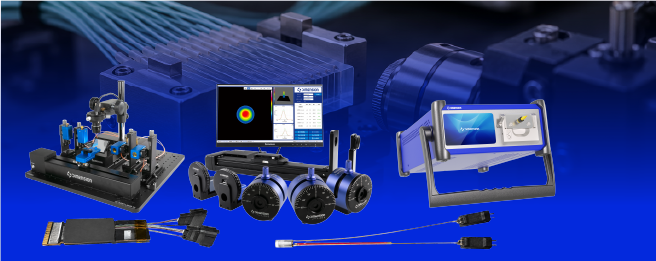
Laser Optical Performance Testing Solutions (New)
This scheme is used for comprehensive optical performance calibration and testing of lasers. It relies on four core optical measurement instruments: optical power meter, wavelength meter, spectrum analyzer, and spot analyzer. It conducts a full-dimensional characterization of the laser's energy, wavelength, spectrum, and beam quality, and is suitable for the research and development verification, as well as the production assembly inspection of continuous/impulse semiconductor lasers, fiber lasers, and solid-state lasers, etc.

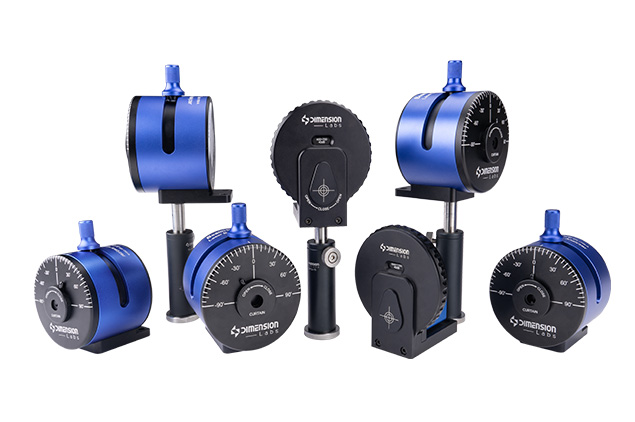
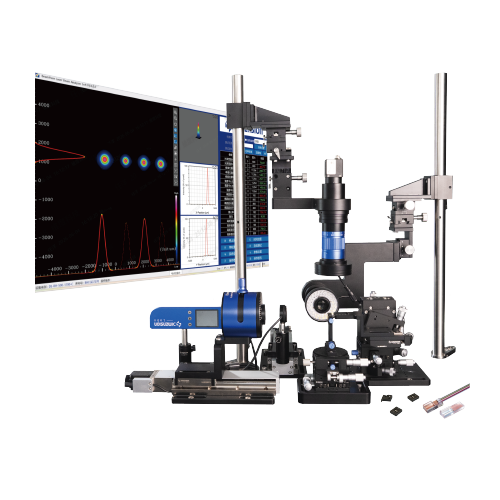
BeamHere Spot Analyzer Series
(Scanning slit type, supporting micro-measurement accessory) Meets the ISO 11146 standard to characterize the spatial quality of the light beam, collects two-dimensional and three-dimensional light intensity distribution, and outputs beam quality parameters such as spot size, ellipticity rate, centroid position, far-field divergence angle, M² factor, beam waist position, Rayleigh length, etc. For conventional free-space beams, they are detected in the scanning slit mode; for micrometer-sized spot types such as VCSEL and fiber end face, a micro-measurement accessory is combined to conduct microscopic spot testing, which is used to evaluate the beam shaping effect, collimation status, locate spot distortion, and uneven energy distribution, etc., as beam defects.
LPM Photoelectric power meter
As an instrument for detecting the energy characteristics of lasers, it is mainly used to measure the continuous output power, average power of pulses, and single pulse energy of the laser. It can collect and evaluate power stability and power fluctuation over a long period of time. It supports zero-point calibration and long-term data recording. It is the basic equipment for determining whether the output energy of the laser meets the standards and for assessing thermal stability and aging characteristics.

Wavemeter
It is used for high-precision absolute calibration of the central wavelength of the laser, providing highly accurate wavelength true values. It can monitor the wavelength drift of the laser under different driving currents and different working temperatures. On the one hand, it can directly evaluate the wavelength temperature drift and current tuning characteristics of the laser. On the other hand, it can compare and calibrate the wavelength readings of the spectrometer, correct the wavelength system deviation of the spectrometer, and ensure the accuracy of the wavelength values.

Spectrometer
It is responsible for analyzing the complete spectral distribution of the laser, precisely obtaining spectral parameters such as peak wavelength, spectral full width at half maximum (FWHM), side-mode suppression ratio (SMSR), etc., and identifying spectral anomalies such as multiple longitudinal modes, parasitic peaks, pump residual, and stray light. Different from the single-point wavelength reading of a wavelength meter, the spectral analyzer can completely restore the spectral profile and is used to evaluate the mode characteristics and noise base of the laser. It is the core equipment for analyzing the spectral purity and mode quality of the laser.
Easily access services and support from Dimension
Want help or have questions?